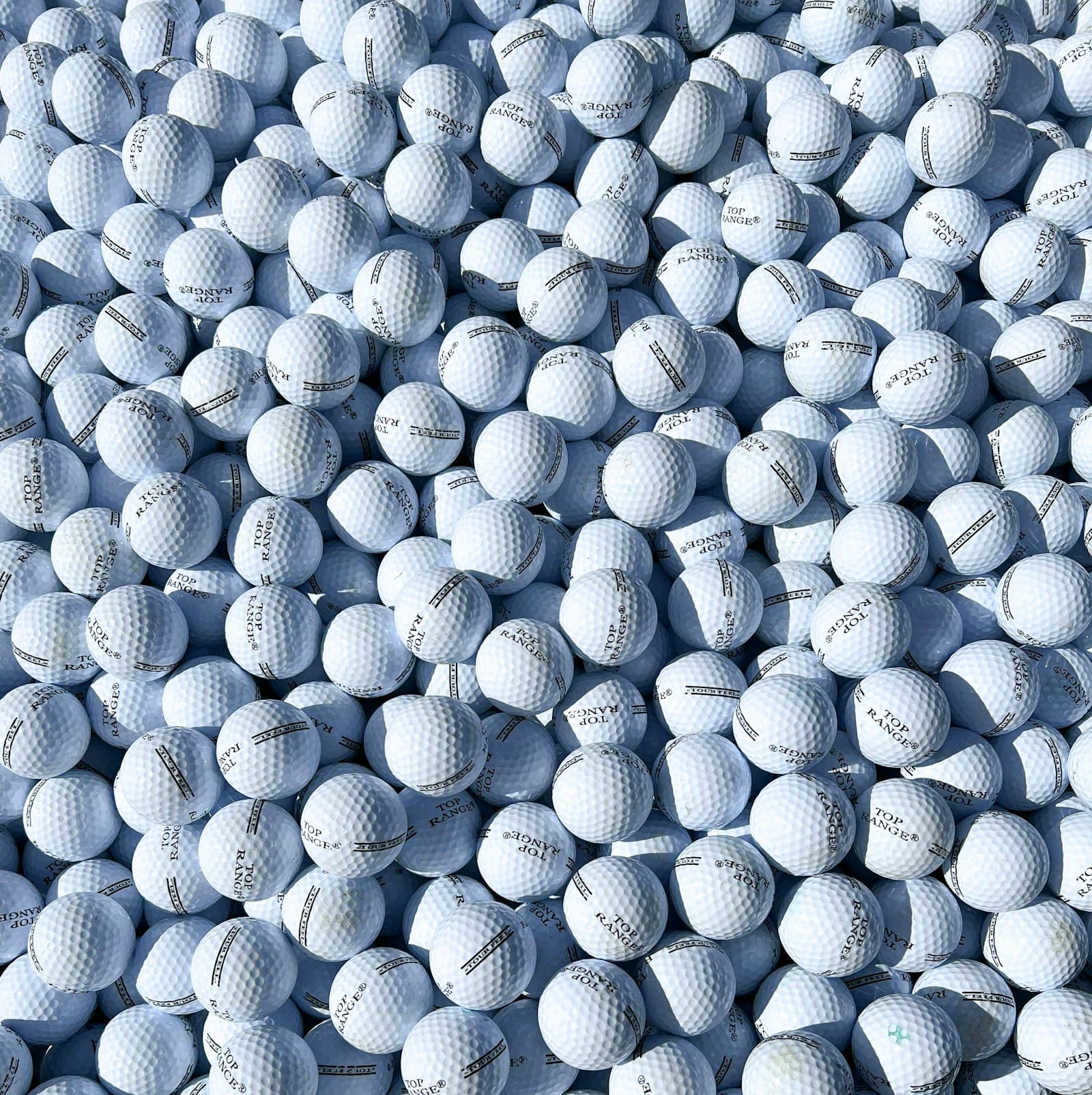
Pre-owned golf balls, often called recycled or lake balls, are balls that have been lost on a course and later recovered, cleaned and sorted. They're one of the easiest ways to play a premium ball for less, which is why so many club golfers keep a bag of them in the boot. But are they really the same as a new sleeve?
Where pre-owned balls come from
Most come out of water hazards, rough, gorse and woodland. Reputable sellers wash them, check them by hand and sort them by brand, model and condition, so you can buy a dozen of the exact ball you already play.
What the grades mean
Grading names vary between sellers, but they usually follow the same idea, from almost-new down to practice quality:
- Mint or Grade A: very close to new, with only the faintest marks.
- Pearl or Grade B: light scuffs, small pen marks or slight discolouration, but no cuts.
- Practice or Grade C: visible marks and wear, best for the range or a practice green.
Does performance actually change?
A ball's distance, spin and feel come from its core and cover. A top-grade ball that was hit a handful of times and lost in the rough is structurally the same as the one you'd buy new. Most club golfers are unlikely to notice a difference between a mint pre-owned ball and a fresh one.
Where things can change is condition. Cuts and deep scuffs on the cover can affect how a ball spins and flies, and balls that spent a long time underwater can lose some of their performance. That's why careful grading matters more than whether a ball is new or used.
When new balls make sense
If you're a low handicapper chasing complete consistency, or you want a fresh sleeve for a big competition, new balls take condition out of the equation. For everyday rounds, quality pre-owned balls are hard to beat on value.
Golf Exchange is launching washed, graded used golf balls with free UK delivery. Get notified from our golf balls page, and trade in the clubs you don't use while you wait.